The Word: Key
Unlocking Meaning, Mystery, and Discovery
Unlocking Meaning, Mystery, and Discovery
To me, key represents access — to understanding, to opportunity, and to connection. It’s what unlocks both literal and metaphorical doors, offering freedom and responsibility.
Keys have long symbolized power, control, and trust — tangible tools that both grant and restrict access. In their physical form, keys reflect the relationship between space, security, and human connection.
Keys represent control over space — the power to grant or deny access. From medieval castle gates to modern smart locks, keys are gatekeepers of privacy and protection.
To possess a key is to possess permission. Keys unlock homes, cars, and safes — physical spaces that contain our most valuable possessions and memories.
Giving someone your key is an act of profound trust. House keys and car keys carry immense symbolic weight — they represent belief in another’s integrity.
In the digital age, keys have shed their physical form but retained their essential function. Cryptographic keys — long strings of bits and bytes — protect our digital lives with mathematics instead of metal.
Transform readable data into cipher text, ensuring privacy across the internet.
SSH keys, API keys, and tokens — digital identifiers that prove you are who you claim to be.
Asymmetric cryptography where one key locks, another unlocks — the foundation of secure communication.
-----BEGIN PUBLIC KEY-----
MIIBIjANBgkqhkiG9w0BAQEFAAOCAQ8A
MIIBCgKCAQEAp7jz0+zq8V9RXJT...
-----END PUBLIC KEY-----
Every HTTPS connection, every cryptocurrency transaction relies on keys — invisible yet omnipresent, protecting our digital interactions with mathematical certainty.
In music, a key establishes the tonal center — the home base from which melodies wander and to which they inevitably return. Unlike physical keys that open single locks, musical keys open entire emotional landscapes.
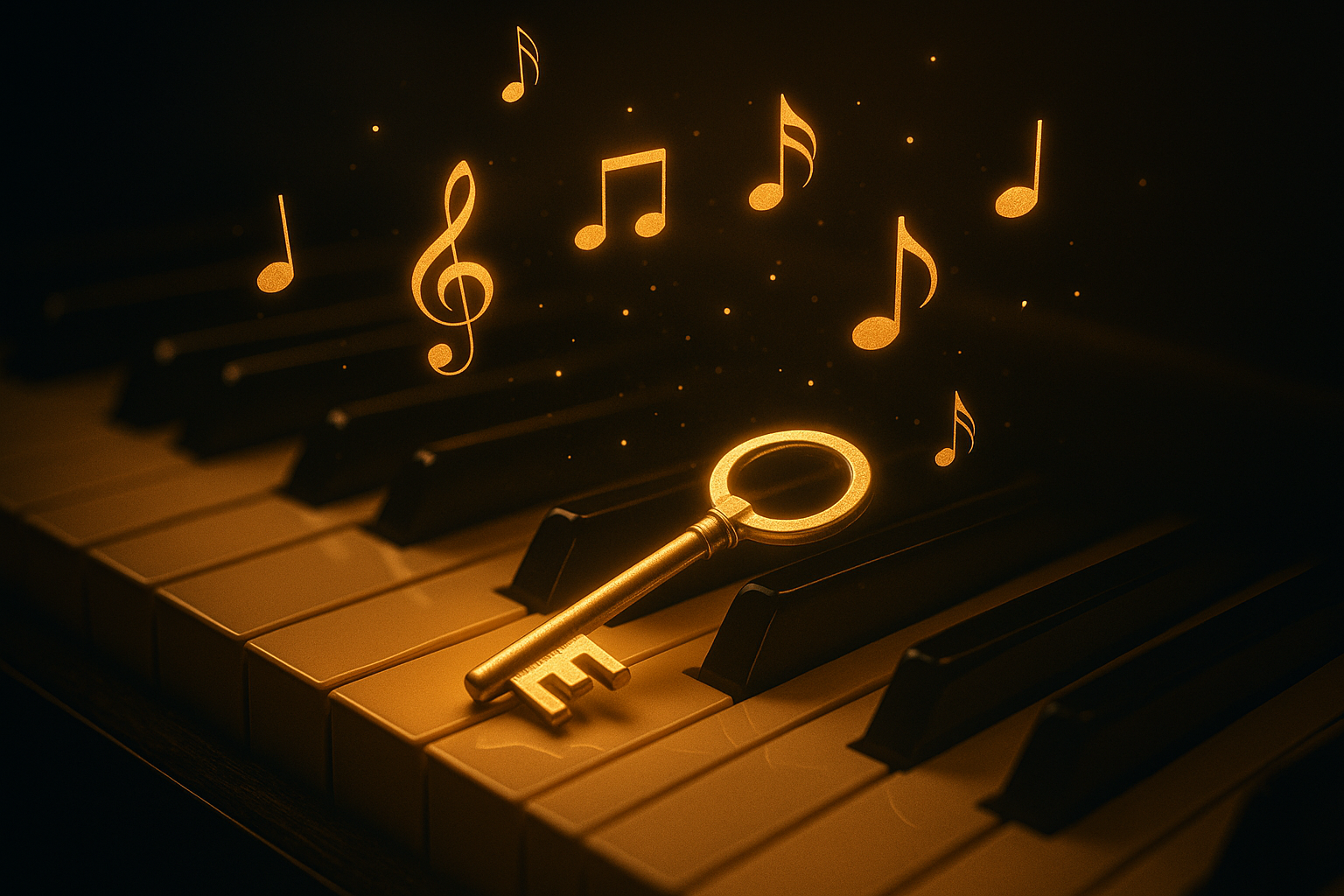
key /kiː/ — noun & adjective
From Old English cæg, cæġe ("key"), of uncertain origin. Related to Frisian kaai, Dutch kaai. The modern sense has expanded far beyond its physical manifestation to encompass abstract concepts of access, solution, and essentiality.
Philosophically, the key is both a tool and a metaphor. It exists only in relation to a lock — meaning that discovery requires mystery, and freedom exists only when something is first closed.
The key reminds us that access is never absolute: some doors should remain closed, others must be earned, and some, once opened, transform us forever.
“A key is a promise — that what is hidden may one day be revealed.”
Through this exploration, I realized that “key” is not just an object — it’s a metaphor for insight, resilience, and discovery. It reminds me that we all hold the keys to our own transformation.
“Education is the key to unlock the golden door of freedom.”
— George Washington Carver